Skip to content
PhageCompassBacteriophage research platform home

Tools

Explore scientific tools for bacteriophage research, spanning genome analysis, taxonomy, phage discovery, therapeutic applications, and computational biology.

PhageCompass in numbers

Scientific tools
9

Featured tools

Tools for phage genomics, taxonomy, discovery and therapeutic applications.

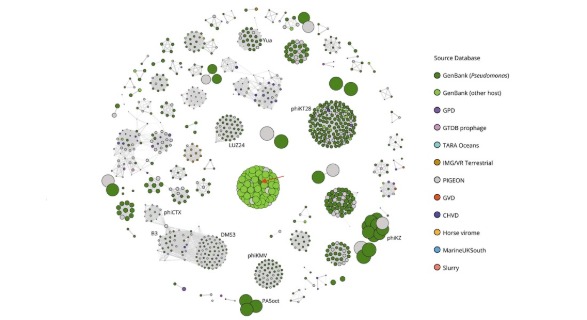
  • PhageClouds network graph: clusters of phage genomes coloured by source database, with a query genome highlighted at the centre.
    Genome comparisonLegacy server live

    PhageClouds

    Fast comparison of a query phage with ~640,000 phage genomic sequences. Alignment-free intergenomic distances are held in a graph database, and related genomes are shown as network clusters with host-centric visualisation.

    Launch tool: PhageClouds (opens in a new tab)

    Opens the legacy server. SWS integration is in progress.
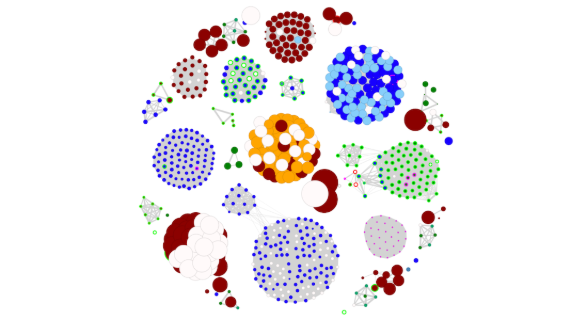
  • PhageLeads network graph: clusters of phage genomes in many colours, with larger dark-red and white nodes among smaller blue, green and orange ones.
    Therapeutic suitabilityLive on SWS

    PhageLeads

    Rapid assessment of a phage's therapeutic viability using an ensemble machine learning approach. Phage genomes are screened for lysogeny and resistance markers: integrase, repressor, antirepressor and parA models, plus CARD, VFDB and ResFinder screening.

    Launch tool: PhageLeads (opens in a new tab)

    Opens on Scientific Web Services

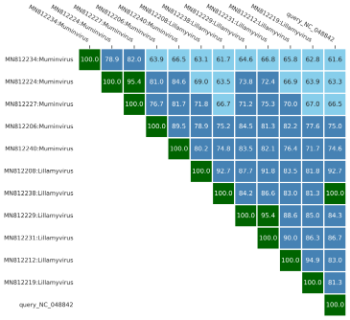
  • Triangular heat map of pairwise similarity percentages between a query genome and reference genomes labelled Muminvirus and Lillamyvirus, with 100.0 on the diagonal.
    Phage taxonomyLive on SWS

    taxMyPhage

    Automated assignment of ICTV taxonomy at genus and species level to dsDNA bacteriophage genomes, by MASH/BLAST clustering against the ICTV Virus Metadata Resource. The output includes a heat map of pairwise similarity between the query and reference genomes.

    Launch tool: taxMyPhage (opens in a new tab)

    Opens on Scientific Web Services

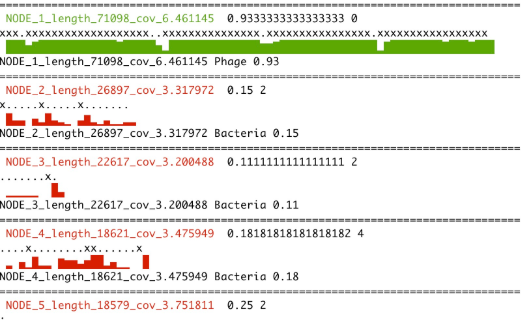
  • Phager example output: per-contig phage-versus-bacteria scores shown as green and red bars.
    Phage identificationLive on SWS

    Phager

    Rapid phage identification from metagenomic contigs: predicts whether each contig in an assembly is of phage or bacterial origin. Genes are called with pyrodigal, grouped into overlapping triplets and scored by a LightGBM classifier; contigs under 5,000 bp are not analysed.

    Launch tool: Phager (opens in a new tab)

    Opens on Scientific Web Services

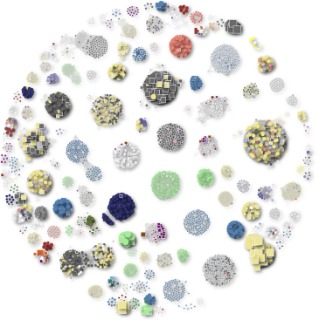
  • Network of phage genome clusters; circles are complete phage genomes and squares are BAPS genomes, coloured by host.
    Phage discoveryLive · public

    BAPS

    Lytic phages are not expected within bacterial genomes, yet a large-scale analysis found thousands of lytic bacteriophage genome sequences in bacterial genome assemblies. Explore them in interactive PhageClouds, alongside complete phage genomes and coloured by host.

    Launch tool: BAPS (opens in a new tab)

    Opens the project's own website

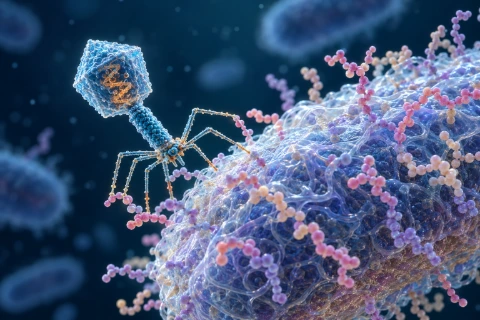
  • Conceptual illustration of a bacteriophage interacting with the polysaccharide capsule of a Klebsiella bacterium.
    Phage–host targetingSWS · restricted access

    Klebreach

    Ranks phages by their ability to breach the capsule of a Klebsiella isolate. Kaptive identifies the K locus, and Klebreach predicts which phage depolymerases can target that capsule, modelling the first step of infection and shortlisting phages to test in the laboratory.

    Launch tool: Klebreach (opens in a new tab)

    Opens on Scientific Web Services. Access is restricted; a sign-in and access grant are required.

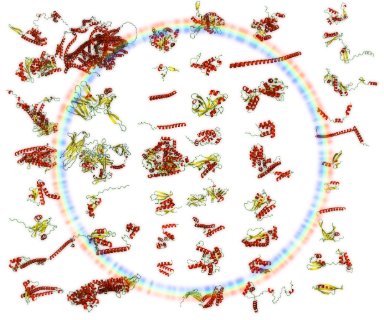
  • PhiAlpha illustration of predicted phage protein structures.
    Protein structureAvailability not yet confirmed

    PhiAlpha

    A database of phage protein structures predicted with AlphaFold.

    Launch unavailable

    No launch destination has been confirmed

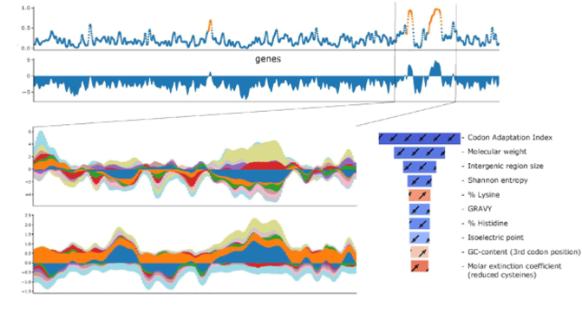
  • PhageBoost output: prophage probability along a genome, with the contributing biological features ranked at right.
    Prophage predictionLegacy server live

    PhageBoost

    Predicts prophage regions in bacterial genomes and metagenomic contigs from gene-level biological features with a gradient-boosted machine learning model, not sequence similarity. Results map prophage probability along the genome.

    Launch tool: PhageBoost (opens in a new tab)

    Opens the legacy server. A restricted SWS version exists.

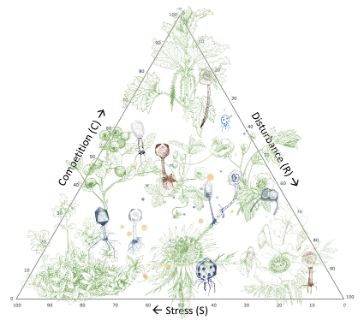
  • CSR triangle with competition, stress and disturbance axes, overlaid with illustrated plants and phage particles.
    Phage ecologyLegacy server live

    PhageCSR

    An explorative tool projecting a phage's early, middle and late genes onto the CSR framework: Grime's plant strategy triangle of competition, stress tolerance and disturbance, applied to phages by the proportion of genes expressed in each transcription phase.

    Launch tool: PhageCSR (opens in a new tab)

    Opens the legacy server. SWS integration is in progress.
  • More on Scientific Web Services

    Scientific Web Services (SWS) is the University of Copenhagen platform that runs several of these tools.

    Explore SWS (opens in a new tab)

Powered by Scientific Web Services

Selected PhageCompass tools run on Scientific Web Services (SWS), the University of Copenhagen platform for scientific applications. Other tools run on their own project servers, as noted on each tool card.

Explore Scientific Web Services (opens in a new tab)